
Curated by Yingxian Keeper, a dedicated researcher of Shanxi’s ancient wooden architecture.
Quick Answer
No, climbing the Yingxian Wooden Pagoda (Shakyamuni Pagoda) has been permanently prohibited since 1999 to protect the structural integrity of this 968-year-old wooden wonder. However, visitors can still enjoy an exceptional ground-level experience, including close-up views of the world’s most sophisticated Dougong bracket system, the giant Shakyamuni Buddha statue visible through the open doors, and a nearby museum with scale models of the internal structure.
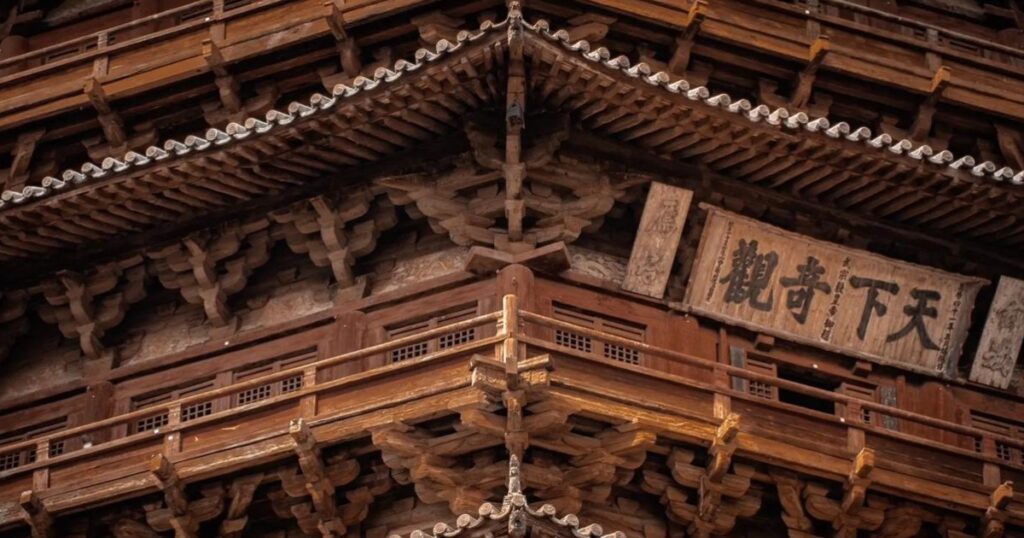
Why Is Climbing Not Allowed?
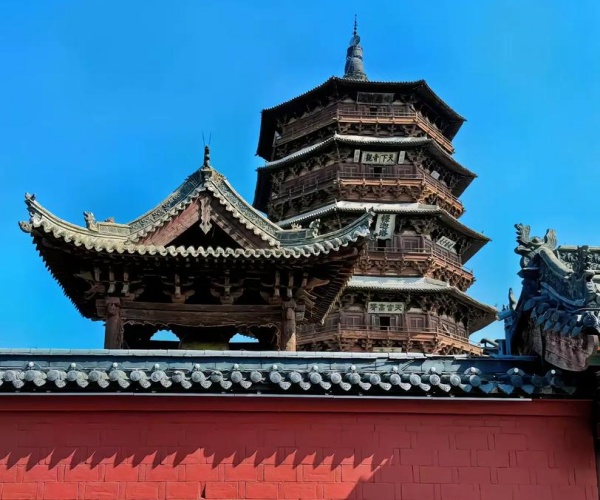
The Yingxian Wooden Pagoda, built in 1056 during the Liao Dynasty, is the oldest and tallest fully wooden pagoda in the world. Learn more about it on Wikipedia.Standing at 67.31 meters (221 feet) tall, it has survived over 40 earthquakes, but centuries of wind, rain, and micro-vibrations have taken a toll:
Structural Tilting: The pagoda has developed a noticeable tilt, particularly in the upper levels, making the stairs unsafe for public use.
Wooden Degradation: The interior wooden beams and stairs have become brittle. Increased foot traffic would accelerate deterioration beyond repair.
- Structural Tilting: The pagoda has developed a noticeable tilt, particularly in the upper levels, making the stairs unsafe for public use.
- Wooden Degradation: The interior wooden beams and stairs have become brittle. Increased foot traffic would accelerate deterioration beyond repair.
- Preservation Priority: In 1999, the State Administration of Cultural Heritage officially suspended all climbing activities to prioritize long-term conservation.
Visitor Note: Even without climbing, the pagoda remains one of the most awe-inspiring architectural feats in China — and arguably the world.
What Can You See and Do at Ground Level?
1.Exterior Architecture — Up Close and Unobstructed
Unlike many heritage sites that hide behind glass barriers, the Yingxian Wooden Pagoda offers unrestricted close-up access to its base. You can walk right up to the wooden pillars and examine:
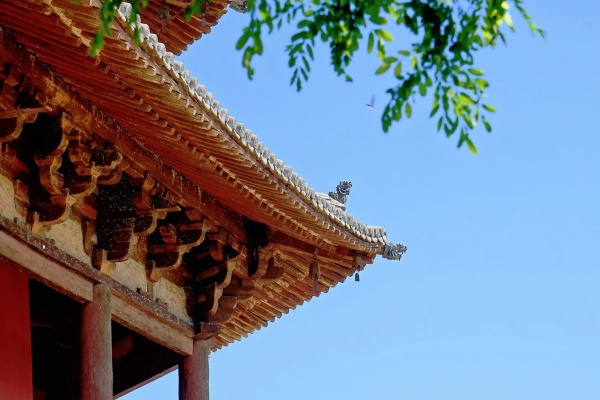
Dougong Brackets (斗拱): The pagoda features 54 different types of Dougong — an ancient Chinese interlocking wooden bracket system that distributes weight without nails or glue. It is, quite literally, “architecture as art.”
- Five-Tiered Eaves: Each of the five stories has dramatically curved eaves that create a sense of upward movement, even from the ground.
- Ancient Inscriptions: Look closely at the wooden plaques and stone pedestals for Liao Dynasty calligraphy and carvings.
- Ancient Inscriptions: Look closely at the wooden plaques and stone pedestals for Liao Dynasty calligraphy and carvings.
Photography Tip: The best exterior shots are taken from the southeast corner in the morning light, when the wooden texture is most visible.
2.The Shakyamuni Buddha — Visible from the First Level
While you cannot climb the interior stairs, the massive Shakyamuni Buddha statue (over 10 meters tall) is clearly visible through the open doors on the first level. You can:
- Observe the intricate painted details and gilded surfaces
- See the surrounding murals depicting Buddhist scenes
- Appreciate the scale of the statue relative to the wooden structure
Note: Flash photography is not permitted inside the first-level hall.

3.The On-Site Museum — Understanding the “Inside” from the Outside
Adjacent to the pagoda, a small but excellent museum displays:
- Scale Models: Detailed miniature replicas showing the internal wooden framework, including the hidden central pillar and the bracket mechanics
- Historical Artifacts: Stone steles, ancient coins, and ritual objects excavated from the pagoda grounds
- Architectural Diagrams: Cross-section drawings explaining how the 67-meter structure stays upright without a single iron nail
Time Needed: Budget 30–45 minutes for the museum after your pagoda visit.
Below is a quick reference for planning your visit to the Yingxian Wooden Pagoda.
| Practical Tips for Visiting the Yingxian Wooden Pagoda | |
| Item | Details |
| Location | Yingxian County, Shuozhou City, Shanxi Province, China |
| Distance from Datong | Approx. 75 km (1.5-hour drive) |
| Entrance Fee | 60 RMB (as of 2026; verify before travel) |
| Opening Hours | 8:00 AM – 6:00 PM (April–October); 8:30 AM – 5:00 PM (November–March) |
| Best Time to Visit | Morning (8:00–10:00 AM) — fewer tour groups, best natural light for photography |
| What to Bring | Comfortable walking shoes, camera with a wide-angle lens, sunscreen |
How to Get There from Datong
- By Car / Didi: Direct drive via S45 Datong–Yingxian Expressway, approximately 1.5 hours
- By Bus: Datong Bus Station offers regular services to Yingxian County (approx. 2 hours)
- Recommended: Combine with a visit to the Hanging Temple (Xuankong Si), which is on the way and makes for a perfect half-day heritage loop
Tips for Making the Most of Your Visit
1.Go Early: Arrive before 9:00 AM to beat the tour bus crowds that typically arrive around 10:00 AM
2.Hire a Local Guide: A 50–80 RMB guided tour adds immense value — you’ll learn about the hidden symbolism in the Dougong brackets and the pagoda’s earthquake-resistant design
3.Bring a Wide-Angle Lens: The pagoda is tall and close-quarters; a 16–24mm lens is ideal for full-structure shots
4.Visit the Museum First: Understanding the internal structure beforehand makes the exterior viewing much more meaningful
5.Respect the Space: While the grounds are open, remember this is an active cultural heritage site — keep voices low and stay on designated paths
Nearby Attractions to Extend Your Trip
If you’re planning a northern Shanxi heritage tour, consider pairing your pagoda visit with:
- Hanging Temple (Xuankong Si) — 1 hour away, famous for its cliffside wooden walkways and religious fusion architecture
- Yungang Grottoes — 1.5 hours away, a UNESCO World Heritage Site with over 51,000 Buddhist statues carved into sandstone cliffs
Final Thoughts
A trip to the Yingxian Wooden Pagoda is unforgettable.
The Yingxian Wooden Pagoda may no longer be open for climbing, but that doesn’t diminish its majesty. Standing beneath 67 meters of pure wooden architecture — the oldest of its kind in the world — is a humbling experience that no photograph can fully capture.
Take your time, study the brackets, visit the museum, and appreciate that this structure has survived nearly a millennium of wind, rain, and earthquakes without a single iron nail.
It is, quite simply, one of the greatest architectural achievements in human history — and it’s still standing.
This article was curated by Yingxian Keeper, dedicated to providing accurate, practical, and sustainable travel information for visitors to Shanxi’s ancient wooden architecture. For more guides, visit our About page.
Internal Link Placeholder (to be added once all three articles are published):
Link to: How to Get to the Hanging Temple from Datong Without a Tour Group — anchor text:
how to get to the Hanging Temple from Datong without a tour groupLink to: How to Explore the Yungang Grottoes in Under Three Hours — anchor text:
explore the Yungang Grottoes in under three hours
Q1: Can you climb the Yingxian Wooden Pagoda in 2026?
A1: No, climbing the Yingxian Wooden Pagoda has been permanently prohibited since 1999 to protect its fragile wooden structure and slight northward tilt. Visitors can only explore the ground level, the first-floor hall with the Shakyamuni Buddha, and the on-site museum.
Q2: Why is the Yingxian Wooden Pagoda famous worldwide?
A2: It is the oldest and tallest existing fully wooden pagoda in the world, built in 1056 during the Liao Dynasty. It stands 67.31 meters tall, uses no iron nails, and incorporates over 54 types of Dougong brackets to survive nearly a millennium of earthquakes and weathering.
Q3: How far is the Yingxian Wooden Pagoda from Datong?
A3: The pagoda is located in Yingxian County, about 75 km (approximately 1.5 hours by car) southwest of Datong city center in Shanxi Province, China.