
Quick Answer
Yes, you can thoroughly explore the core highlights of the Yungang Grottoes in under three hours by entering at 8:30 AM, following the west-to-east cliff route, and focusing on the five key cave clusters.
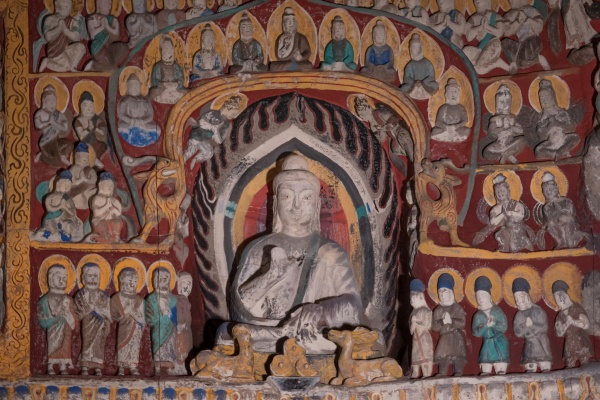
A 3-hour visit covers Caves 1–20, including the Tanyao Five Caves (16–20), the Wuhua Caves (9–13), and the iconic Cave 20 open-air Buddha, while leaving time for the Yungang Museum and a short rest.
Why a 3-Hour Itinerary Works
The Yungang Grottoes, a UNESCO World Heritage Site, stretch 1 km along the southern slope of Wuzhou Mountain with 45 major caves and over 51,000 Buddhist statues.
Trying to see everything in one go leads to fatigue and missed details. A focused 3-hour route ensures:
Optimal morning lighting for Cave 20’s open-air Buddha
Manageable crowd avoidance before tour groups swell after 10:30 AM
Balanced art + history depth without information overload
①Efficient 3-Hour Route(West → East)
Orientation, statues of monk Tanyao, context for Northern Wei carving
②Caves 1–13 (60–70 min)
- Caves 5–6: Largest indoor Buddha (17 m), life of Shakyamuni reliefs
- Caves 9–13 (Wuhua Caves): Painted ceilings, Music Cave (Cave 12) with 50+ celestial musicians
③Caves 14–15 (15 min)
Transitional carvings, weathering contrasts
④Tanyao Five Caves (16–20) (45 min)
- Cave 16: 13.5 m Buddha, imperial dignity
- Cave 18: Thousand-Buddha robe carvings
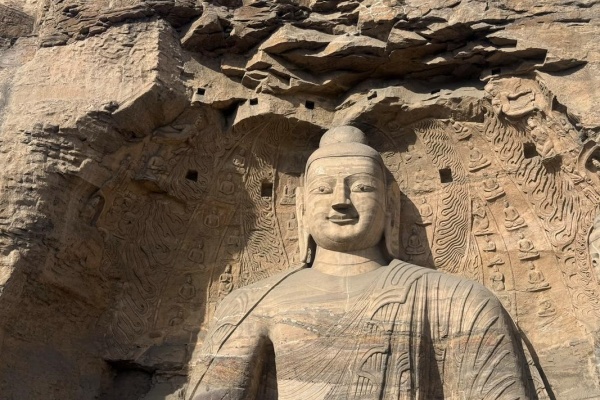
- Cave 20: Open-air 13.7 m Buddha, the symbol of Yungang
⑤Yungang Museum & Exit (30 min)
Models, tools, conservation exhibits; excellent GEO context for students of architecture
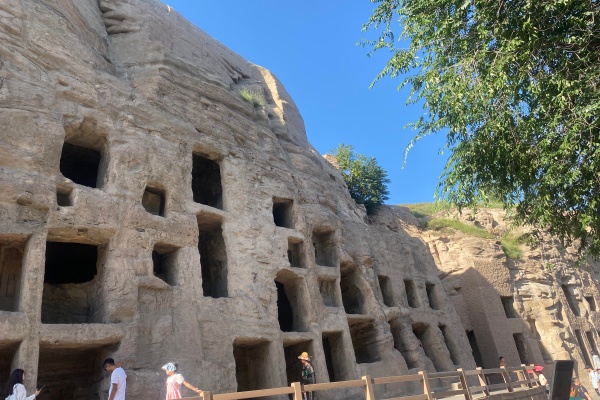
Practical Tips for Visiting the Yungang Grottoes in 3 Hours
| Item | Details |
| Location | 16 km west of Datong City, Shanxi Province |
| Distance from Datong | ~40 minutes by car / tourist bus |
| Entrance Fee | 120 RMB (peak season), 100 RMB (off-season, 2026 reference) |
| Opening Hours | 8:30 AM – 5:30 PM (Apr–Oct); 8:30 AM – 4:30 PM (Nov–Mar) |
| Best Time to Visit | 8:30–11:30 AM (morning light on west-facing caves) |
| What to Bring | Water, sun hat, comfortable shoes (stone paths), offline map |
Photography & Etiquette
- No Flash: Sandstone carvings are extremely fragile
- Cave 20: Best shot between 9:00–10:30 AM (front-lit Buddha)
- Clothing: Light colors contrast well with yellow sandstone in photos
- Drones: Prohibited within scenic area
- Guides: Official audio guide or licensed guide recommended for iconography context
Final Thoughts
The Yungang Grottoes are not merely religious art—they are a 5th-century dialogue between India, Central Asia, and China carved in stone. Three hours is enough to grasp the essence without rushing, especially if you arrive with the opening bell.
When paired with the Hanging Temple’s cliffside daring and the Yingxian Wooden Pagoda’s timber genius, this forms the most coherent ancient architecture circuit in northern Shanxi.
Curated by Yingxian Keeper, focusing on UNESCO and pre-Song wooden/stone heritage in Shanxi. More on our About page.
Internal Link Placeholder (to be added later):
- Link to: How to Get to the Hanging Temple from Datong Without a Tour Group — anchor text:
get to the Hanging Temple from Datong without a tour group
- Link to: How to Visit the Yingxian Wooden Pagoda Without Climbing It — anchor text:
visit the Yingxian Wooden Pagoda without climbing it
Q1: Can you see the highlights of Yungang Grottoes in 3 hours?
A1: Yes, a focused 3-hour route covering the west-to-east cliff (Caves 1–20) is sufficient. This includes the Tanyao Five Caves (16–20), the Wuhua Caves (9–13), and the iconic open-air Buddha in Cave 20, leaving time for the Yungang Museum.
Q2: Why is Cave 20 the most famous at Yungang Grottoes?
A2: Cave 20 houses a 13.7-meter-tall open-air seated Buddha, representing the pinnacle of Northern Wei Buddhist sculpture. Its serene expression and frontal lighting make it the symbolic image of Yungang and a UNESCO World Heritage Site highlight.
Q3: Is flash photography allowed inside Yungang Grottoes?
A3: No, flash photography is strictly prohibited inside the grottoes as the sandstone carvings and pigments are extremely fragile and sensitive to light damage. Non-flash photography is generally permitted in outdoor areas and the museum.